
Introduction
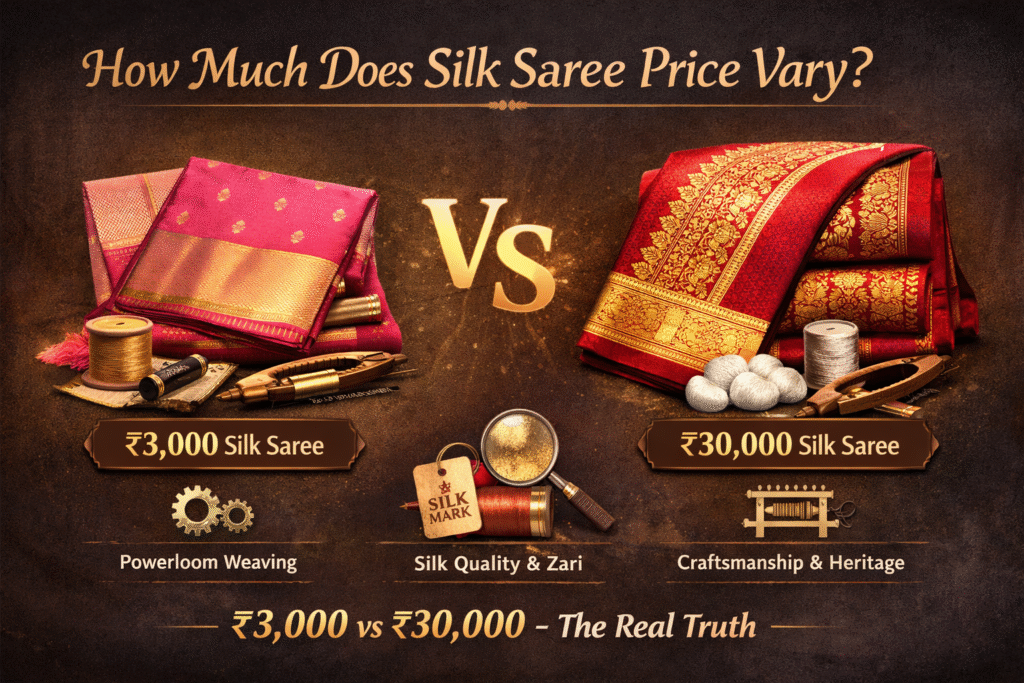
Silk sarees are timeless, elegant, and deeply rooted in Indian tradition. But one question confuses almost every buyer:
Why does one silk saree cost ₹3,000 while another goes up to ₹30,000 or more?
At first glance, both may look beautiful—but the truth lies beneath the weave. Let’s uncover the real factors that decide silk saree pricing, so you can make a smart and confident purchase.
₹3,000 Silk Saree – What Are You Actually Paying For?
Silk sarees in the ₹3,000–₹6,000 range are popular for daily wear, gifting, and light occasions.
Key Features:
- Silk Blend or Art Silk: Often mixed with polyester or viscose
- Powerloom Weaving: Faster production, lower cost
- Tested Zari or Metallic Threads: Not pure silver
- Machine Finish: Less intricate detailing
Best For:
- Office wear
- Casual functions
- Budget-friendly festive wear
👉 These sarees look attractive but do not qualify as pure silk.
₹30,000 Silk Saree – What Makes It So Special?
High-end silk sarees are a result of craftsmanship, purity, and heritage.
Key Features:
- 100% Pure Mulberry Silk Yarn
- Handloom Weaving: Weeks or months of skilled labor
- Pure Silver Zari (Gold-Coated): Certified quality
- Traditional Designs: Temple borders, korvai weaving, rich pallus
- Silk Mark Certified: Proof of authenticity
Best For:
- Weddings & bridal wear
- Heirloom collections
- Grand festive occasions
👉 You’re not just buying a saree—you’re investing in art, legacy, and durability.
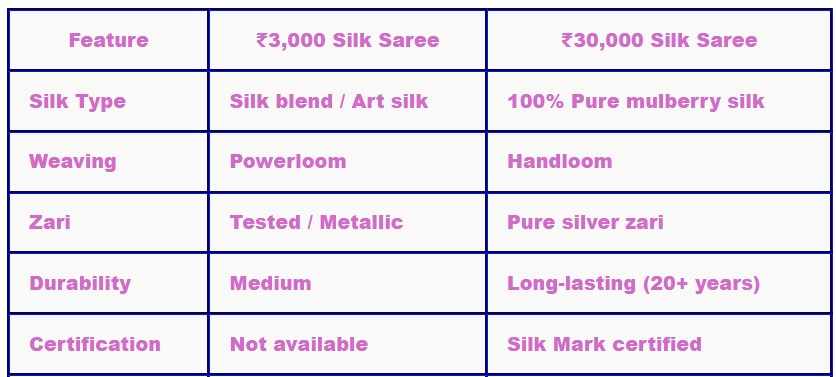
🔎 ₹3,000 vs ₹30,000 – Quick Comparison
🧠 Why the Price Difference Matters
A pure silk saree:
- Retains shine for decades
- Becomes softer with every wear
- Holds cultural and resale value
- Supports traditional weavers
A low-cost silk saree:
- Looks good initially
- May fade or lose texture over time
- Ideal for short-term use
🛍️ Which One Should You Choose?
Ask yourself:
- Is it for a wedding or daily use?
- Do you value long-term durability or budget?
- Are you buying for tradition or trend?
There’s no wrong choice—only the right saree for the right purpose.
✨ Final Thoughts
The difference between a ₹3,000 and ₹30,000 silk saree lies in silk purity, weaving technique, zari quality, and craftsmanship.
Knowing this truth helps you shop wisely—without overpaying or getting misled.
💡 An informed buyer always gets the best value.